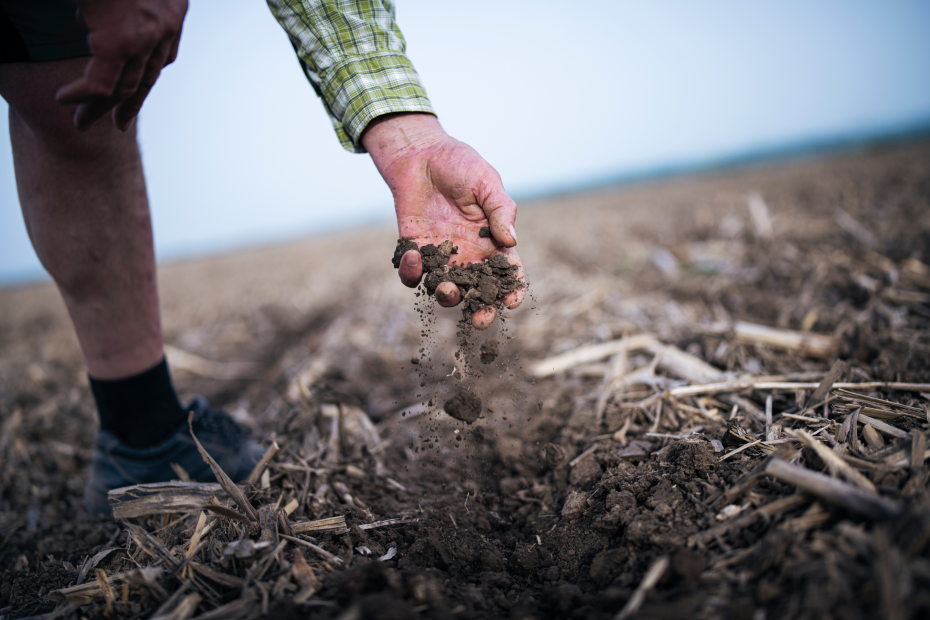
At this year’s New York Climate Week, agrifood corporations once again took to the stage to showcase their sustainability credentials. This time rallying around the term “regenerative agriculture.”
As campaign advisor at the Changing Markets Foundation, Lily Roberts noted in The Grocer that the phrase has quickly become a catch‑all within the agrifood industry, serving as a convenient shield for climate action and diverting attention from one of the sector’s most significant climate impacts: methane.[1]
The piece points out that the Changing Markets Foundation’s 2024 report: The New Merchants of Doubt found 269 references to “regenerative agriculture” across sustainability reports from 22 major agrifood companies, more than twice as often as mentions of methane, embracing regenerative language while downplaying its most potent greenhouse gas. [2]
That raised a question for us: has this language started to appear in public‑facing marketing and on supermarket packaging? And if so, given the lack of an agreed definition for “regenerative”, what greenwashing risks might that pose?
What the data shows
Using Impact Score’s product universe – which tracks the sustainability credentials of over 300,000 active supermarket products and more than 1 million product versions – we analysed how often certain environmental phrases appear in product names, marketing text and packaging descriptions between October 2022 and October 2025.
To understand how regenerative language is emerging, we compared it with an equivalent farming-specific sustainability term that has been in use for years: ‘sustainable farming’. This isn’t a like-for-like measure of overall ‘sustainability’ language, which remains far more widespread and continues to rise, but it provides a useful benchmark for how quickly new terminology is entering farming related packaging copy.

(Figure 1: Number of Active Products using selected phrase on-packaging over time, Oct 2022–Oct 2025)
The results show a clear linguistic shift. Mentions of “regenerative” have risen sharply over the past months, while “sustainable farming”, though still more common overall, has plateaued and seen a noticeable dip in use since mid-2025.
Importantly, this doesn’t mean ‘regenerative’ is overtaking ‘sustainable’ across the board; sustainable language is still far more widespread, and the broader use of the word ‘sustainable’ continues to rise across supermarket products overall. Instead, the trend suggests that within farming-focused claims, brands are increasingly adopting regenerative language. Analysis of the underlying data shows that most of this growth comes from two phrases in particular: “regenerative farming” and “regenerative flour”, indicating that the rise is concentrated in agricultural claims rather than broader sustainability marketing
Why language matters
Consumers regard terms such as “regenerative”, “carbon neutral” and “natural” as signals of positive environmental intent. But this is exactly the kind of claim the UK’s Green Claims Code cautions brands to be wary of. It states that claims should not focus on only the positive aspects of a product, service, process, brand or business when other significant environmental impacts remain unaddressed.[3]
At the same time, agriculture is a major methane emitter – roughly one‑third of human‑caused methane emissions come from livestock systems.[5] If brands emphasise regenerative sourcing without addressing core issues such as methane from livestock or fertiliser use, they risk giving consumers an impression that a product is greener overall than it actually is.
Our findings show that the increasing use of the term in corporate sustainability reports is now beginning to be mirrored on supermarket shelves. Whether this represents meaningful progress, or simply a shift in terminology, depends on how brands substantiate their claims. While the term ‘regenerative‘ may currently be used by companies with genuine sustainable intent, its lack of a legal or industry-wide definition makes it highly vulnerable to misuse as its popularity grows.
This vulnerability is clearly demonstrated by recent regulatory action. The Advertising Standards Authority (ASA) ruled against BrewDog in December 2023 for its use of the term ‘carbon negative’. The ASA concluded their ad was misleading because, as the ruling states, ‘there was no qualifying information in the ad which outlined the basis’ for the claim [6]. This verdict serves as a powerful warning: without mandatory, unambiguous substantiation, ‘regenerative’ risks mirroring phrases like ‘carbon neutral’ by becoming the next target for regulatory scrutiny under the Green Claims Code.
What is clear is that language on packaging is evolving fast, and our data offers a window into how these sustainability narratives take root in the public domain.
References
[1] Changing Markets Foundation, The New Merchants of Doubt: How Big Meat and Dairy Avoid Climate Action, 2024. (changingmarkets.org)
[2] Lily Roberts, “Big Food’s regenerative agriculture push risks ignoring methane cuts,” The Grocer, 24 September 2024. (thegrocer.co.uk)
[3] Green Claims Code: Making environmental claims on goods and services, GOV.UK. (gov.uk)
[4] Ibid., para “Claims should not just focus on the positive environmental aspects …” (gov.uk)
[5] Livestock and enteric methane, FAO. (fao.org)
[6] BrewDog PLC ruling, Advertising Standards Authority, December 2023. (asa.org.uk), FAO. (fao.org)